
You pour a glass of water, take a sip, and something is off. Maybe it tastes metallic. Maybe it tastes like a swimming pool. Maybe it just tastes flat and unpleasant. So you dump it out and reach for bottled water instead — again. That gets expensive, and it gets old fast.
Legend Plumbing provides bad tasting water treatment for homes throughout Sarasota and the surrounding area. We identify what’s causing the taste and install the right filtration system to fix it. Whether you need a whole-house solution or a point-of-use filter, we’ll help you get water that actually tastes good. For related water quality issues, see our water quality services page. If the problem turns out to be inside your plumbing, our plumbing repair team can help.
Why Sarasota Water Tastes Different
Sarasota gets its drinking water from the Floridan Aquifer — a massive underground limestone formation that supplies most of Florida. The water that comes out of that aquifer carries minerals picked up along the way. After that, it goes through municipal treatment, which adds disinfectants. Because of this, both steps can affect taste.
Mineral Content From the Aquifer
The Floridan Aquifer is rich in dissolved minerals. Iron, manganese, and calcium all occur naturally in the water. These aren’t harmful at normal levels. However, they change how water tastes.
-
Iron — Creates a metallic, slightly bitter taste. Can also leave reddish-brown stains on fixtures.
-
Manganese — Similar metallic taste. Can cause black staining in sinks and laundry.
-
Calcium and magnesium — These make water “hard.” They don’t cause a strong taste on their own. Even so, they interact with other minerals and can affect how water feels in your mouth.
Chlorine and Chloramines
Sarasota’s municipal water is treated with disinfectants to kill bacteria. Chlorine and chloramines are the two most common. They’re necessary for safety. However, they leave a chemical taste that’s easy to notice — especially in unfiltered tap water.
Seasonal Changes
Water quality in Sarasota shifts with the seasons. Heavy rain affects groundwater levels and mineral concentrations. On the other hand, drought periods concentrate minerals. As a result, residents often notice the taste changes at different times of year without understanding why.
Plumbing System Factors
Sometimes the taste comes from the pipes, not the water source. Older homes with galvanized steel or corroded pipes can introduce metals into the water. Water heaters with sediment buildup affect hot water taste. On top of that, water that sits in pipes overnight picks up flavors from the pipe material itself. If you suspect the pipes are the problem, our pipe repair team can inspect them.
What Your Water’s Taste Is Telling You
The specific taste you notice points to a specific cause. Here’s how to read the clues.
Metallic Taste
Dissolved iron, copper, or manganese. Common in Sarasota because of the aquifer’s mineral content. If the taste is worse in hot water, the water heater may be contributing. See our water heater repair page for more on this.
Chlorine or Chemical Taste
Municipal disinfection. The taste is strongest in water that’s been sitting in pipes. Running the tap for a minute often reduces it.
Sulfur or Rotten Egg Taste
Hydrogen sulfide gas. More common in well water. However, it can appear in municipal supplies under certain conditions.
Earthy or Musty Taste
Algae or organic compounds in the water source. Sarasota’s warm climate and surface water exposure can contribute to this.
Salty Taste
Chloride or sulfate minerals. In coastal areas, saltwater intrusion into groundwater can raise chloride levels.
Bitter Taste
Magnesium or certain metals. Often accompanies hard water issues.
Is Bad Tasting Water Dangerous?
Most of the time, no. Taste issues usually come from minerals and disinfectants that aren’t harmful at the levels found in drinking water. Still, there are exceptions worth knowing about.
-
Iron and manganese — Not harmful at typical levels. However, they can stain fixtures and laundry.
-
Copper — Safe at low levels. High levels can cause health issues, especially in people with certain medical conditions.
-
Chlorine and chloramines — Safe at municipal levels. Some people are sensitive to the taste and smell.
-
Hydrogen sulfide — Not harmful at low levels. Even so, it’s unpleasant.
If the taste changed suddenly, or if it comes with other symptoms like discoloration or a strange smell, it’s worth having the water tested. Some contaminants that affect taste can also affect health at high enough concentrations.
How to Narrow Down the Cause Before Calling
You can figure out a lot about your water problem before anyone arrives.
Test Hot vs. Cold Water
Taste cold water first. Then taste hot water. If the taste only shows up in hot water, the issue is likely your water heater — sediment buildup or a failing anode rod. If both taste off, the problem is in the water supply.
Check Different Faucets
Taste water from a few different taps. If only one faucet has the problem, the issue is localized to that fixture or the pipe feeding it. Our faucet repair team can inspect the fixture if needed.
Run the Water First
Let the tap run for 30 seconds and taste again. If the taste fades, the problem is stagnant water sitting in your pipes. That’s common in homes with low water use.
Look at Your Fixtures
Check for staining around drains and faucets. Reddish-brown stains suggest iron. Blue-green stains suggest copper. Black stains suggest manganese.

Treatment Options for Sarasota Homes
The right solution depends on what’s causing the taste. There’s no single system that fixes every problem.
Carbon Filtration
Activated carbon filters remove chlorine, sediment, and many organic compounds that affect taste. They’re the most common solution for chemical and earthy tastes.
-
Best for: Chlorine taste, chemical taste, earthy taste
-
How it works: Water passes through carbon media that traps contaminants
-
Limitation: Filter media needs periodic replacement
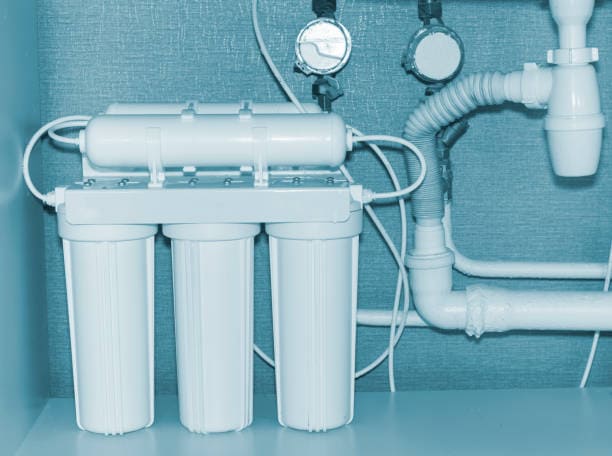
Reverse Osmosis
Reverse osmosis pushes water through a membrane that removes a wide range of dissolved contaminants, including minerals that cause metallic and salty tastes.
-
Best for: Metallic taste, salty taste, multiple taste issues
-
How it works: Water is forced through a semi-permeable membrane
-
Limitation: Typically treats only one faucet — usually the kitchen sink
Water Softeners
Water softeners remove calcium, magnesium, and iron through ion exchange. They’re effective for hard water and metallic tastes caused by those minerals. If hard water is damaging your pipes, our repiping services team can help with long-term solutions.
-
Best for: Metallic taste from iron and hard water minerals
-
How it works: Resin beads exchange hardness minerals for sodium or potassium
-
Limitation: Doesn’t remove chlorine or organic compounds
Whole-House vs. Point-of-Use
If the taste affects all the water in your home, a whole-house system makes sense. If only your drinking water tastes off, a point-of-use filter at the kitchen sink is often enough. For more on how these systems fit into your overall plumbing, see our residential plumbing services page.
Why Choose Legend Plumbing for Bad Tasting Water Treatment in Sarasota Florida
Local Experts
We understand Sarasota Florida water quality challenges, including the specific causes of bad tasting water in our area. Visit our Water Quality Services page to learn more.
Licensed Professionals
Every plumber on our team is fully licensed and insured. You can trust your installation is done right. Explore our Plumbing Repair and Residential Plumbing Services pages for our full range of expertise.
Honest Pricing
We provide clear estimates with no hidden fees. You’ll know the cost before we start.
Quality Products
We recommend proven water treatment systems from quality manufacturers. We stand behind the products we install.
Complete Service
From testing to installation to ongoing maintenance, we’re your complete water treatment resource.
Areas We Serve
Legend Plumbing provides bad tasting water treatment throughout Sarasota County and the surrounding area. If you’re in one of these communities, we’re within reach:
Not sure if we serve your area? Reach out and ask.
Other Services We Provide
Along with bad tasting water treatment, Legend Plumbing handles:
-
Water Quality Services — testing and treatment for water issues
-
Plumbing Repair — general fixes for fixtures and pipes
-
Residential Plumbing Services — household plumbing services
-
Water Heater Repair — tank and tankless systems
-
Water Heater Installation — new water heater installation
-
Drain Cleaning — for slow or blocked drains
-
Clogged Drain Repair — for stubborn clogs
-
Sewer Line Repair — for damaged sewer lines
-
Leak Detection — finding hidden leaks
-
Slab Leak Repair — for leaks under concrete slabs
-
Toilet Repair — toilet fixes and replacements
-
Faucet Repair — faucet repairs and installations
-
Garbage Disposal Repair — disposal fixes
-
Pipe Repair — damaged pipe repairs
-
Repiping Services — full and partial repiping
-
Hydro Jetting — high-pressure drain cleaning
-
Tankless Water Heater Installation — tankless system installation
-
Commercial Plumbing Services — commercial plumbing needs
-
Emergency Plumber — urgent service when problems can’t wait
Frequently Asked Questions About Bad Tasting Water in Sarasota Florida
What causes bad tasting water in Sarasota?
The most common causes are dissolved minerals from the Floridan Aquifer (iron, manganese, calcium) and chlorine or chloramines added during municipal treatment. Older plumbing can also introduce metals into the water.
Is bad tasting water dangerous?
In most cases, no. Taste issues usually come from minerals and disinfectants that aren’t harmful at normal levels. If the taste changed suddenly or comes with discoloration or a strange odor, it’s worth testing.
Why does my water taste like metal?
Metallic taste comes from dissolved iron, copper, or manganese. If the taste is worse in hot water, the water heater may be contributing through sediment buildup or anode rod failure. Our water heater repair team can inspect it.
Why does my water taste like chlorine?
Chlorine is added to municipal water for disinfection. The taste is strongest in water that’s been sitting in pipes. Carbon filtration removes it effectively.
Why does my water taste better after running the tap?
Water sitting in pipes picks up flavors from the pipe material. Running the tap flushes that stagnant water and brings in fresh water from the main supply.
Do I need a whole-house system or just a filter at the sink?
If the taste affects all your water, a whole-house system usually makes sense. If only your drinking water tastes off, a point-of-use filter like reverse osmosis at the kitchen sink is often enough.
How do I know which treatment system I need?
The right system depends on what’s causing the taste. A water test identifies the specific minerals and contaminants in your water, which tells us exactly what to treat.