
Expert Slab Leak Repair in Sarasota Florida
Slab leaks are the plumbing problem most homeowners don’t see coming. There’s no puddle under the sink. No drip behind the wall. The pipes are buried under the concrete foundation, so when they start leaking, the signs are indirect: a water bill that doesn’t match usage, a warm spot on the floor, the sound of running water when every fixture is off, or a musty smell that won’t go away. By the time one of those signs is obvious, the leak has usually been running for weeks.
Legend Plumbing provides slab leak repair for homes throughout Sarasota and the surrounding area. We locate the leak without breaking up the floor first, then repair or reroute the pipe. For leaks in other parts of the plumbing, see our leak detection and pipe repair pages. If the system is failing throughout, our repiping services team can help.
Why Slab Leaks Happen in Sarasota
Three local conditions make slab leaks more likely here than in many other parts of the country.
Very Hard Water Corrodes Under-Slab Pipes
Sarasota’s water comes from the Floridan Aquifer and measures around 12.7 grains per gallon. That mineral content reacts with metal pipes over years. Copper develops pinhole leaks. Galvanized steel rusts from the inside out. The damage happens on the interior of the pipe, so the pipe itself can look fine from the outside while the inside is nearly closed off or failing.
Sandy Soil Shifts Under the Slab
Sarasota’s sandy coastal soil doesn’t hold its shape the way clay does. When water from heavy rains moves through it, the soil around under-slab pipes shifts. That movement stresses the pipes and can cause joints to separate or the pipe itself to crack. Homes that held up for decades can develop slab leaks after a particularly wet season.
High Water Table Keeps Pipes Wet
Many Sarasota neighborhoods sit on a high water table. Pipes buried under a slab are in constant contact with moisture, which accelerates corrosion on metal pipes. That’s one reason slab leaks tend to appear in older Sarasota homes first — the pipes have been wet for decades.
Aging Homes and Older Pipe Materials
Homes built before 1970 may still have original galvanized steel under-slab pipes. Homes built between the late 1970s and 1995 may have polybutylene. Both materials have exceeded their expected service life and are prone to failure without warning.
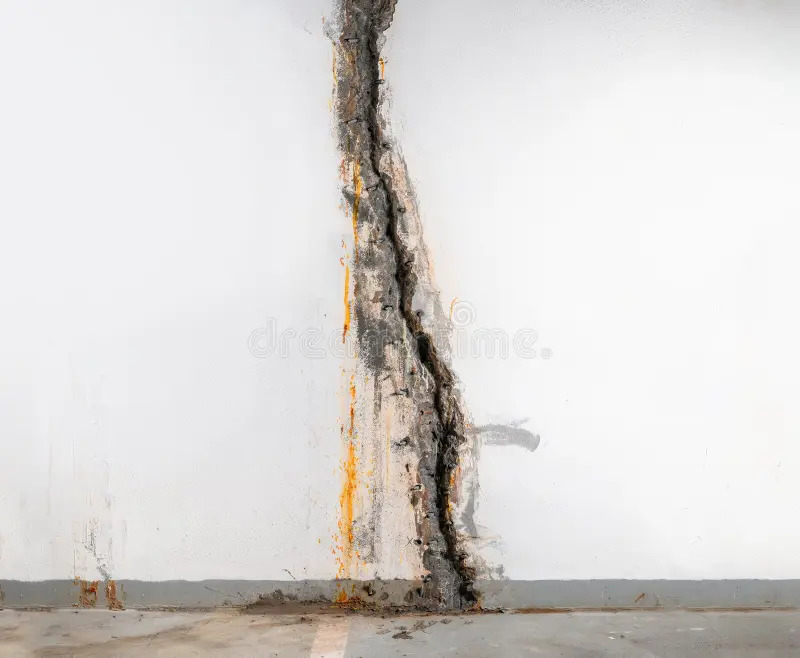
Signs You Have a Slab Leak
Inside the Home
-
Warm spots on the floor — A hot water line leaking under the slab heats the floor above it.
-
Sound of running water when fixtures are off — This is often the first sign of a pressurized leak.
-
Water bill that doesn’t match usage — Water is escaping somewhere in the system.
-
Cracks in the foundation or uneven floors — Underground leaks shift the soil that supports the foundation.
-
Musty odor or mold growth — Persistent moisture creates conditions for mold, even when no water is visible.
-
Buckling or warping of flooring — Water under the slab can damage flooring above it.
Outside the Home
-
Soggy patches in the yard that don’t dry out.
-
Unusually green grass in one area, even during dry weather.
-
Sinking or settling around the foundation.
-
Higher water bills during months with no irrigation use.
If you notice one or more of these signs, the system needs a professional assessment. A small slab leak today becomes a much larger repair if it’s left alone.
How We Locate a Slab Leak
Finding a slab leak used to mean breaking up the floor until the source was found. That approach is expensive and disruptive. Modern detection uses targeted tools to narrow down the location before any concrete is touched.
Acoustic Listening Equipment
Water escaping from a pipe makes a sound — a faint hiss or rush that travels through the pipe and surrounding material. Acoustic equipment picks up those sounds and helps pinpoint where they’re strongest.
Thermal Imaging
A hot water leak warms the material around it. Thermal imaging shows temperature differences on surfaces, which can reveal where a hot water line is leaking under a slab.
Pressure Testing
We isolate sections of the under-slab plumbing and test them individually. Pressure testing shows which section is losing water and narrows the search area.
Electronic Line Location
We use a transmitter on the pipe to trace its path under the slab. This helps us pinpoint the exact location of the leak above ground, so the repair can be focused.

Repair Options for Slab Leaks
Spot Repair
When the leak is isolated to one section, we can break into the slab at that location, repair or replace the damaged pipe, and restore the concrete. This is often the fastest fix, but it disrupts flooring and may not be the best choice if the pipe has multiple failure points.
Rerouting the Line
Rather than breaking through the slab, we can reroute the affected pipe through the attic or walls. This is often less disruptive to flooring and finishes. The old pipe is left in place and abandoned, and a new line is installed above. This is one of the most common slab leak repairs in Sarasota.
Repiping Under the Slab
If the pipe is failing system-wide, spot repairs and reroutes become temporary fixes. The better long-term solution may be replacing the affected section or repiping the home. Our repiping services team handles full and partial repipes.
Trenchless Pipe Lining
For some slab leaks, pipe lining creates a new pipe inside the old one. This avoids breaking up the slab and can extend the life of the existing pipe. Not every pipe is a candidate for lining — a camera inspection determines whether it’s viable.
What to Expect During a Slab Leak Repair
Step 1: You describe the problem. Tell us what you’re seeing, hearing, or smelling.
Step 2: We locate the leak. We use acoustic listening, thermal imaging, and pressure testing to narrow down the location.
Step 3: We confirm with a camera or pressure test. This tells us the pipe material, condition, and whether the leak is isolated or part of a larger problem.
Step 4: We explain your options. You’ll know what the repair involves, whether rerouting or spot repair makes more sense, and what the cost will be.
Step 5: We complete the work. Most slab leak repairs are completed within a day or two, depending on access and the repair method.
Step 6: We verify. After the repair, we confirm the leak is stopped and check that water pressure and flow are back to normal.
What Affects the Cost of Slab Leak Repair
Costs vary widely depending on the pipe, the location, and the repair method.
Leak Location
A leak near the edge of a slab is easier to access than one in the middle of a finished living room. Leaks under tile, hardwood, or carpet require more careful restoration.
Pipe Material
Copper, galvanized steel, and PEX each behave differently. Galvanized steel is often replaced rather than repaired. Copper can be spot-repaired. PEX can be spliced.
Repair Method
Spot repair requires breaking the slab. Rerouting through the attic or walls avoids the slab but involves more pipe. Repiping is the most extensive option and the most expensive.
Restoration
Patching concrete and restoring flooring adds to the cost. Some homeowners handle flooring restoration separately with a flooring contractor. Our plumbing repair team can advise on what’s needed.
Residential and Commercial Slab Leaks
The approach differs between homes and businesses.
Residential
Home slab leaks usually affect under-slab supply lines in kitchens, bathrooms, or laundry rooms. The priority is fixing the leak with minimal disruption to living space. Our residential plumbing services team handles residential slab leaks.
Commercial
Commercial buildings have larger and more complex under-slab plumbing. Repairs often need to be scheduled around business hours. Our commercial plumbing services team handles commercial slab leaks.
Why Legend Plumbing Is the Right Choice for Slab Leak Repair in Sarasota Florida
Detection Expertise That Saves Your Foundation. The difference between a successful slab leak repair and an ongoing nightmare is accurate leak detection. Our investment in acoustic sensors, thermal imaging, and video inspection technology means we find the leak before we cut concrete. We don’t guess, we don’t hope, and we don’t cut multiple holes searching. We locate the leak with precision and access it with the minimum possible disruption to your foundation.
All Repair Options Under One Roof. Some plumbing companies offer only one repair method—whatever equipment they own or technique they’re comfortable with. We provide the full range of slab leak repair solutions and recommend the one that genuinely serves your best interests. For related plumbing needs, our Water Heater Repair and Water Heater Installation services address hot water system issues. For drain concerns, our Drain Cleaning, Clogged Drain Repair, and Sewer Line Repair services maintain your drainage infrastructure. For fixture repairs, our Toilet Repair, Faucet Repair, and Garbage Disposal Repair services handle the visible endpoints. For deep cleaning, our Hydro Jetting service clears lines without chemicals. For water heating upgrades, our Tankless Water Heater Installation specialists provide energy-efficient solutions. For businesses, our Commercial Plumbing Services handle slab leaks in commercial buildings. For homeowners, our Residential Plumbing Services provide complete home plumbing care.

AREA WE SERVED
Legend Plumbing provides slab leak repair throughout Sarasota County and the surrounding area. If you’re in one of these communities, we’re within reach:
Not sure if we serve your area? Reach out and ask.
Other Services We Provide
Along with slab leak repair, Legend Plumbing handles:
-
Leak Detection — finding hidden leaks
-
Pipe Repair — damaged pipe repairs
-
Repiping Services — full and partial repiping
-
Plumbing Repair — general plumbing repairs
-
Drain Cleaning — routine drain maintenance
-
Clogged Drain Repair — for stubborn clogs
-
Sewer Line Repair — damaged sewer lines
-
Hydro Jetting — high-pressure drain cleaning
-
Water Heater Repair — tank and tankless systems
-
Water Heater Installation — new water heater installation
-
Tankless Water Heater Installation — tankless systems
-
Toilet Repair — toilet fixes and replacements
-
Faucet Repair — faucet repairs and installations
-
Garbage Disposal Repair — disposal fixes
-
Residential Plumbing Services — household plumbing
-
Commercial Plumbing Services — commercial plumbing needs
-
Emergency Plumber — urgent service when problems can’t wait
Questions About Slab Leak Repair in Sarasota
How do I know if I have a slab leak or just a high water bill?
A high water bill combined with any of these symptoms strongly suggests a slab leak: the sound of running water when nothing is on, warm spots on the floor, damp carpet, or cracks appearing in walls. The definitive test is to turn off all water-using fixtures and check your water meter. If the flow indicator is still moving, water is leaking somewhere. Our Leak Detection service can confirm whether the leak is under your slab.
Will my homeowners insurance cover slab leak repair?
Coverage varies significantly by policy and provider. Many policies cover the resulting damage from a slab leak—such as damaged flooring and drywall—but may not cover the cost of repairing the pipe itself. Some policies have specific exclusions for foundation plumbing. We recommend reviewing your policy and contacting your insurance agent. We provide detailed documentation of our findings to support your claim process.
How long does slab leak repair take?
Spot repairs are typically completed in one day. Epoxy pipe lining may take one to two days, including curing time. Complete pipe rerouting typically requires two to three days depending on the home’s layout and the number of fixtures being reconnected. We provide a detailed timeline during your estimate.
Can you repair a slab leak without cutting my floor?
In some cases, yes. Epoxy pipe lining can seal leaks from inside the pipe with minimal access points, often avoiding the need to cut through flooring. If the pipe is too damaged for lining, we discuss tunneling from the exterior to access the leak without disturbing interior flooring, though this depends on the leak’s location relative to exterior walls.
Will a slab leak damage my foundation?
Yes, if left unrepaired. Water leaking under a slab erodes the soil supporting your foundation, causing uneven settlement. This leads to cracks in walls and floors, doors that stick or won’t latch, and in severe cases, structural damage that requires extensive foundation repair. Prompt slab leak repair prevents this escalation.
What causes copper pipes under a slab to leak?
The most common causes are electrolysis from stray electrical currents, abrasion from pipes rubbing against concrete or rebar during thermal expansion, chemical reaction with aggressive soil conditions, and high water pressure accelerating wear at vulnerable points. Homes built in the 1970s through 1990s are particularly susceptible due to the copper piping and installation practices of that era.
Is it better to repair or reroute a slab leak?
The answer depends on the condition of your under-slab piping overall. If you have a single isolated leak and the rest of the piping is in good condition, spot repair or epoxy lining is typically the best approach. If you’ve had multiple slab leaks or your home is in an age range where copper failure is common, rerouting through the attic or walls is often the more cost-effective long-term solution. We provide honest guidance based on your specific situation.
How can I prevent future slab leaks?
Monitor your water bill for unexplained increases and investigate promptly. Maintain reasonable water pressure—excessive pressure accelerates pipe wear. Be alert to the early warning signs: running water sounds, warm floors, and cracking walls. For homes with known copper under-slab plumbing, proactive replacement through our Repiping Services eliminates the risk entirely.