
Main Water Line Repair
The main water line brings water from the meter into your home. When it fails, the signs can be easy to miss at first. Your water bill creeps up. A patch of lawn stays wet when everything else is dry. The pressure at your shower is not what it used to be.
Legend Plumbing locates and repairs failed main water lines. We find the leak before it washes away soil, damages the foundation, or turns into a full break.
Where Your Responsibility Begins
It helps to know who owns what. In most Florida cities, the water utility owns the line from the street main to the meter. You own the line from the meter to your house.
That boundary matters. If the leak is between the meter and your home, it is your repair. If water is pooling on the street side of the meter, the utility may be responsible.
A plumber can confirm which side the leak is on before any digging starts. That one step saves time and money.
Signs Your Main Water Line Is Failing
A main line leak does not always spray water into the air. A slow leak can run for weeks before you notice it. Watch for these signs:
-
A water bill that jumps. If your habits have not changed and the bill climbs, water is going somewhere it should not.
-
Wet or sunken patches in the yard. A section of lawn that stays soggy during dry weather is a strong clue.
-
Low pressure throughout the house. When the supply line is damaged, every faucet and shower feels it.
-
Discolored water. Dirt or rust can seep in through a crack and tint the water brown or cloudy.
-
The sound of running water when everything is off. A faint hiss near the meter or along the line points to a leak.
-
A moving meter dial. This is the most reliable test. Turn off every fixture. Watch the low-flow dial on the meter. If it moves, water is escaping on your side.
How the Leak Is Found
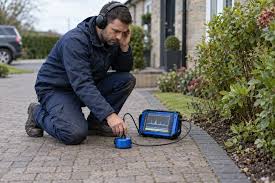
Finding an underground leak is not guesswork. The technician starts with the meter test to confirm the leak is on your side. Then the search begins.
Acoustic listening equipment picks up the sound of pressurized water escaping the pipe. The technician walks the path of the line and listens for the strongest signal. Sometimes tracer gas is used instead. The gas escapes through the break and is detected at the surface.
Once the leak is narrowed to a small area, digging can be targeted. This protects landscaping and driveways from unnecessary damage.
What the Repair Involves
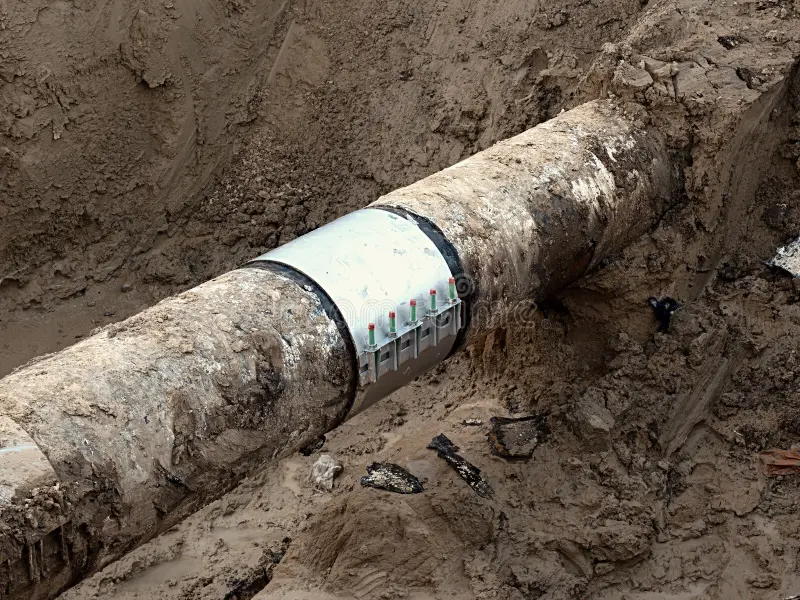
Once the damaged section is exposed, the repair depends on the pipe material and how bad the failure is. A small break or crack in copper, PVC, or galvanized pipe can often be fixed by cutting out the bad section and splicing in new pipe.
Sometimes replacement makes more sense than repair. If the pipe is badly corroded, has failed in several places, or is near the end of its life, a partial or full line replacement may cost less over time than repeated repairs.
After the fix, the line is pressurized and checked for leaks. The trench is backfilled and compacted. The surface is restored. Water is turned back on, and flow is checked at the fixtures.
What to Do Before the Plumber Arrives
If you think you have a main line leak, a few steps can limit the damage:
-
Shut off the main valve at the meter or where the line enters the house. This stops the flow.
-
Open a couple of faucets to drain leftover pressure from the pipes.
-
Do not dig in the wet area. You could hit the pipe or another utility line.
-
Take photos of the wet area, any water inside the house, and the meter reading. This helps if you file an insurance claim.
Areas We Serve
Legend Plumbing provides main water line repair throughout Sarasota County and Manatee County, including:
Other Services We Provide
Along with leak detection, Legend Plumbing handles:
-
Plumbing Repair — general plumbing repairs
-
Slab Leak Repair — leaks under concrete slabs
-
Pipe Repair — damaged pipe repairs
-
Repiping Services — full and partial repiping
-
Drain Cleaning — routine drain maintenance
-
Clogged Drain Repair — for stubborn clogs
-
Sewer Line Repair — damaged sewer lines
-
Hydro Jetting — high-pressure drain cleaning
-
Toilet Repair — toilet fixes and replacements
-
Faucet Repair — faucet repairs and installations
-
Garbage Disposal Repair — disposal fixes
-
Water Heater Repair — tank and tankless systems
-
Water Heater Installation — new water heater installation
-
Tankless Water Heater Installation — tankless systems
-
Residential Plumbing Services — household plumbing
-
Commercial Plumbing Services — commercial plumbing needs
-
Emergency Plumber — urgent service when problems can’t wait
Frequently Asked Questions
How do I know if the leak is my responsibility or the city's?
In most Florida cities, the utility owns the line from the street main to the meter. You own the line from the meter to the house. If the leak is on the house side, it is your repair. The meter test confirms which side is losing water.
Can I repair a main water line myself?
No. Underground water lines need excavation, correct fittings, and knowledge of local code. A failed DIY repair can make the leak worse or create a contamination risk. This is work for a licensed plumber.
How long does main water line repair take?
A small repair on an accessible line can often be done in a day. Deeper lines, lines under concrete, or full replacements take longer. The technician can give a time estimate after the leak is located.
Will my homeowners insurance cover main water line repair?
It depends on your policy. Many policies exclude the underground pipe itself. Some may cover damage inside the house if a covered event caused the leak. Check with your insurer.
What causes a main water line to fail?
Common causes include corrosion in older metal pipe, shifting soil, tree roots, and ground movement from wet and dry seasons. Age and pipe material are the biggest factors.